

Teaching Students to Think, Not Just Find the Right Answer
I’m increasingly worried about how we teach critical thinking.
Actually, I’ll go further than that. I’m worried about how we teach thinking.
Lots of students are conscientious, well prepared and very focused on doing well. But increasingly, they’re are anxious to know what the answer is:
· What am I supposed to say?
· Is this right?
· Is this what the marker wants?
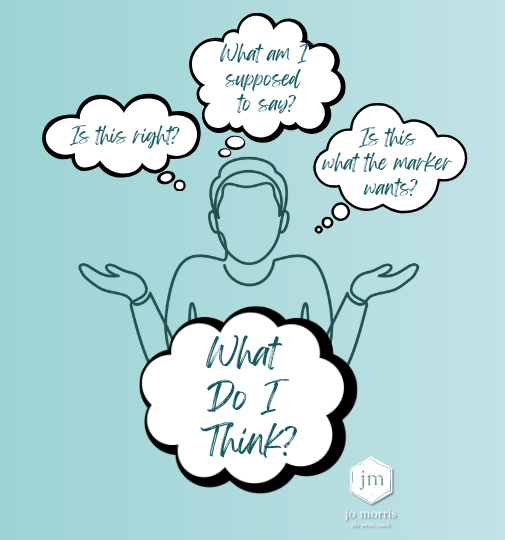
What am I supposed to think? can be a very different question from What do I think? Students need opportunities to explore ideas before worrying about the “right” answer.
There are obviously times when there is a right answer. If you’re solving an equation, spelling a word or identifying a grammatical feature, accuracy matters.
But a lot of the really interesting questions don’t work like that.
And if we become too focused on finding the answer, we can lose something much more valuable: the ability to explore an idea before deciding what we think about it.
The problem isn't that students want to get things right. It's that sometimes the search for the right answer begins before they've had a chance to think.
Thinking needs other people
One of the ways we learn to think is through discussion.
You say something. Someone disagrees with you. You explain why you think what you think, and perhaps realise that your reasoning isn’t quite as solid as you thought it was.
Or something even more interesting happens: the other person says something you hadn’t considered, and your position shifts.
That doesn't mean you've lost the argument. It means you've thought.
It’s one of the reasons I think debating is so valuable in schools. Debating teaches young people that disagreement doesn't have to become a fight for territory. You can hold an opinion and someone else can hold another one. What matters is whether, when challenged, you can explain and support your position.
I suspect COVID disrupted some of this. I don't think we yet understand all the effects of that disruption, and I'm wary of blaming COVID for every change we see in young people. But it's hard to imagine that losing so much ordinary face-to-face classroom interaction had no effect at all.
Those exchanges can look incidental. I don't think they are.
But what if I get it wrong?
There’s another pressure at work too.
For students with their sights set on Excellence, Scholarship or a particular pathway after school, results matter. Understandably, that can make getting something wrong feel risky.
So instead of asking:
What do I think about this?
the temptation is to ask:
What am I supposed to think about this?
Those are very different questions.
I see versions of this when I work with senior secondary, or tertiary, students on their writing. Often they know the content extremely well. They have evidence and they know how that evidence works.
The difficult leap is from knowing the material to developing an argument about it.
That requires uncertainty. You have to be prepared to entertain an idea without knowing yet whether it's going to work.
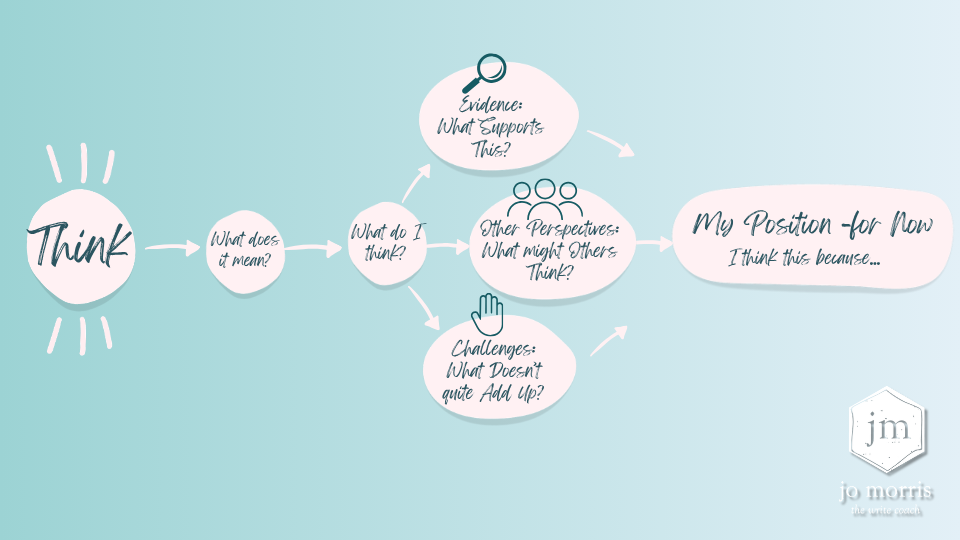
Finding an answer and thinking aren't the same thing. Critical thinking means testing evidence, considering other perspectives and being prepared to change your position.
The history lesson that blew my mind
I remember encountering this myself when I went to university.
I'd learned history at school in the 1970’s, largely as a collection of things that had happened. You learned the information, then you reproduced it.
At university, one of my history lecturers presented a completely different way of looking at it.
Imagine a battle.
Ask the general what happened and you'll get one account. Ask a soldier and you'll get another. Someone caring for the weapons might have a different perspective again, while the people left behind dealing with the consequences would have stories of their own.
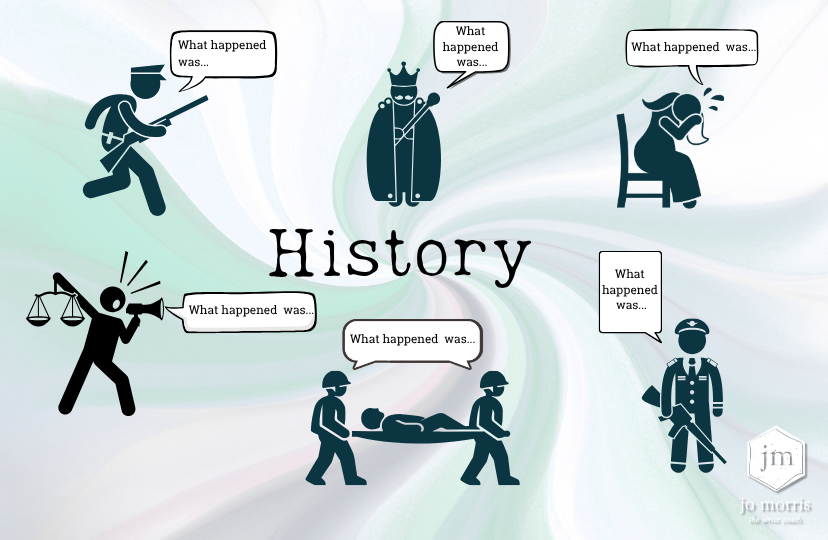
One event doesn't produce one story. Evidence, experience and perspective all influence how we understand what happened.
Which one is history? All of them. However, the version that eventually becomes the accepted account is narrowed, often to the victors’ leaders. What we know of the past is constructed from evidence, interpretation and perspective. Change the perspective and you may change the story.
It blew my mind.
More importantly, it changed what I thought learning was.
I didn't just have to know history anymore.
I had to think about it.
We're surrounded by answers
Unfortunately, much of the world students encounter outside the classroom pushes in the opposite direction.
We live in a headline culture. A complicated event is reduced to the handful of words most likely to make us click, and it's remarkably easy to read those words without ever opening the article underneath.
Social media promises certainty even more enthusiastically: there's one thing you're doing wrong; one trick will change your life. Do this and you'll become thinner, cleverer, healthier or apparently fix whatever terrible thing has happened to your boobs.
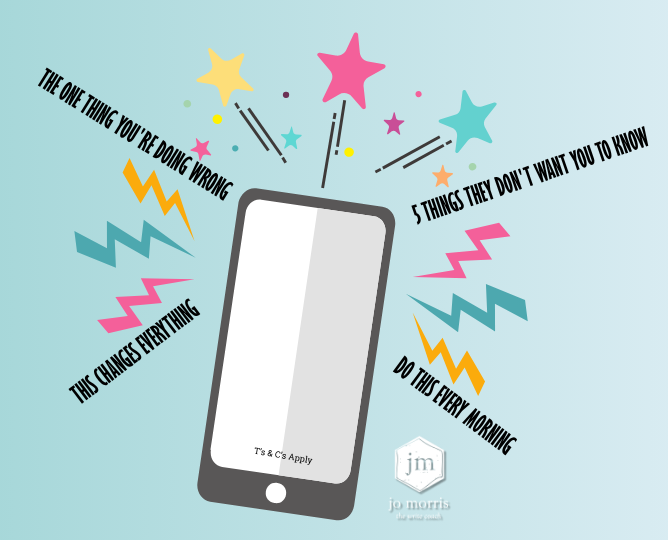
Certainty makes a great headline. Nuance, not so much. Unfortunately, the most accurate answer is sometimes the least clickable one: it depends.
Nuance doesn't make a particularly good hook, but certainty does.
Perhaps humans have always preferred certainty. Curiosity is much less comfortable because genuine curiosity means being willing to discover that you were wrong. Sometimes it means reaching the end of your investigation and discovering that the only sensible answer is, it depends.
That's difficult territory.
It's also where critical thinking happens.
What if the question doesn't have two sides?
This is one of the reasons I created my Critical Thinking Topic Cards.
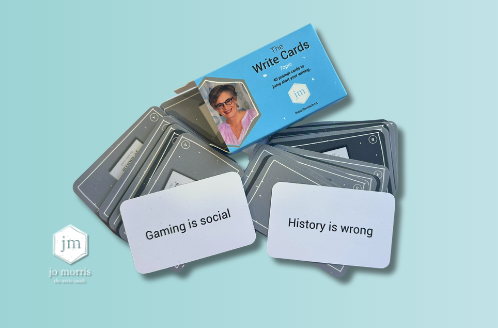
Don't answer too quickly. Once we start unpacking what gaming and social actually mean, a seemingly simple statement becomes much more interesting.
I wanted questions that didn't invite an automatic yes or no.
Gaming is social.
Well, is it?
Before you decide, you have to work out what gaming means. Are we talking about a teenager alone in a bedroom playing a single-player game, or six friends talking continuously while playing online together?
Then there's social.
Does social interaction have to happen face to face? Does being in the same physical space make an activity social? Is an online friendship less social than an offline one?
Suddenly, "Gaming is social" isn't really one question at all.
And that's the point.
The cards aren't designed to tell you what to think. They're designed to give you something worth thinking about.
They work particularly well with other people because someone else will almost inevitably see the topic differently. That's useful! The simple, ‘obvious’ answer is often the lazy one.
Evidence should support thinking, not replace it
There's an important role for technology here too, including AI. I'd much rather see a student begin by thinking:
I think this might be true because…
and then use AI or a search engine to investigate whether their reasoning stands up.
· What evidence supports my position?
· What evidence challenges it?
· What haven't I considered?
That's very different from typing the question into a search box and asking for the answer.
Evidence shouldn't save us the trouble of thinking. It should help us test whether our thinking can survive scrutiny. Sometimes it will strengthen our original position. Sometimes we'll have to qualify it or abandon it altogether.
We need to stop treating changing your mind as evidence that your first opinion was weak. Sometimes it's evidence that your thinking was strong enough to respond to new information.
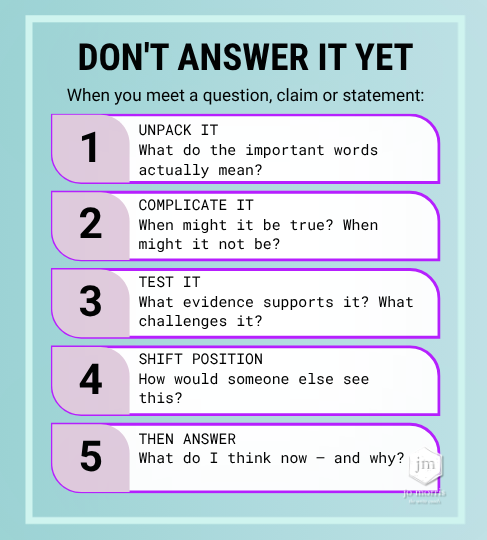
Don't answer it yet. Unpack the language, complicate the idea, test it against evidence, shift perspective — then decide what you think.
This matters beyond the classroom
We're in the thick of an election campaign.
We’re hearing a lot of claims presented with great certainty. We're seeing slogans, statistics and carefully chosen words designed to make complicated issues feel straightforward.
Critical thinking doesn't mean automatically distrusting all of them.
It means resisting the urge to accept or reject them before we've asked some questions:
· What exactly is being claimed here?
· What does that word mean in this context?
· What evidence would I need before I believed it?
· And perhaps most importantly: what might I be missing?
Those are the same habits a student needs when confronted with an unfamiliar text, an essay question or a Topic Card.
They're also the habits the rest of us need when we encounter a political ad in our social media feed.
We need places where it's safe not to know
Perhaps, then, teaching critical thinking isn't primarily about teaching students a clever set of analytical techniques. It’s about giving them opportunities to wonder aloud, to disagree without falling out, and to discover that changing your mind is allowed.
We need questions interesting enough to make that happen.
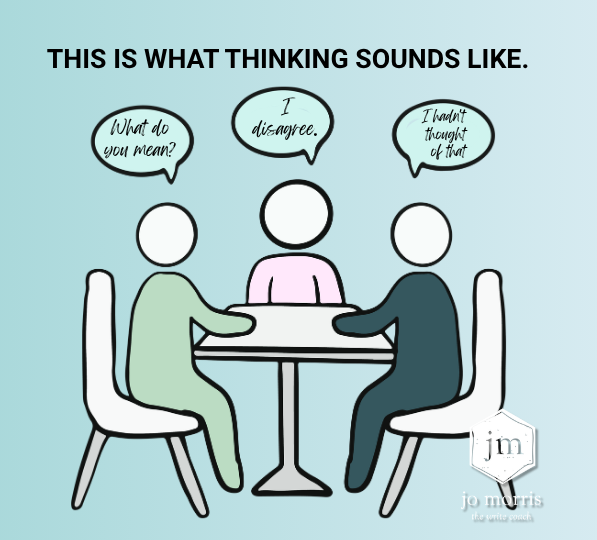
This is what thinking sounds like: questioning, disagreeing, explaining, reconsidering — and sometimes changing your mind.
That's what I hope my Topic Cards provide. They aren't answer cards. There isn't a teacher's sheet hidden somewhere with the correct response to Gaming is social.
I don't want there to be. Because the point isn't to arrive at what I think. It's to learn how to arrive at your own answer — and to be able to explain why you got there.
That's a skill students need for exams.
It's a skill the rest of us need for elections.
And it's a skill I think is worth practising long after we've left both behind.