Seeing Your Writing Through Someone Else's Eyes
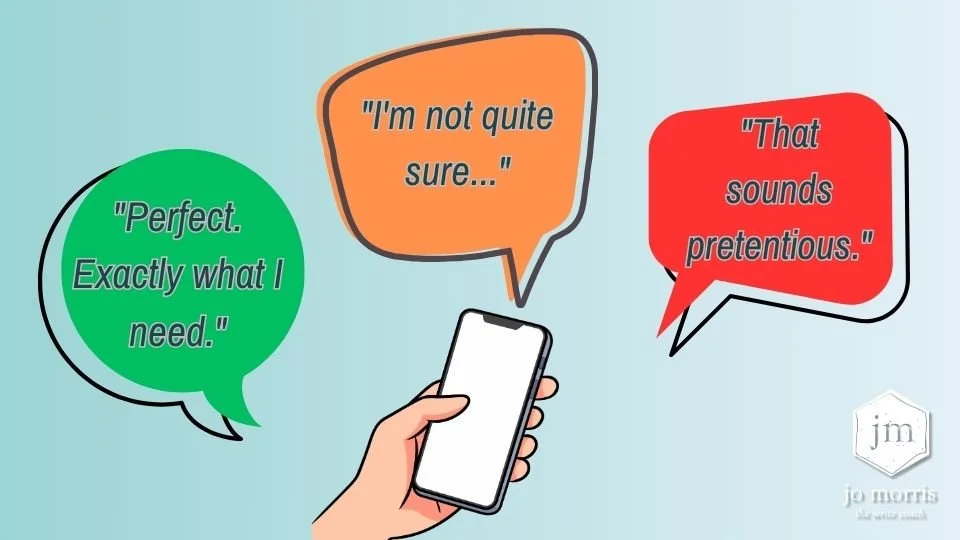
The same words rarely create the same meaning. Three readers can interpret one message in completely different ways because each brings different experiences and expectations to what they read.
If three complete strangers read your website copy, and each interpret it differently...what can you do to make your message clearer?
You’re in a café when three women at the next table catch your ear.
They’re staring at a phone — at your homepage, in fact.
“I love this,” the first one says. “‘Styled blooms for everyday’? Sounds great. And they do same-day delivery. I might use them for Mum’s birthday.”
You can’t help smiling. Yes!
But her friend tilts her head.
“Hmm… ‘Styled blooms’ sounds fancy, but then it says ‘everyday.’ Are they a premium place or more like a grab-and-go?”
Then the third woman joins in.
“‘Styled blooms’ sounds like influencer nonsense to me,” she shrugs. “Probably charges $95 for three roses and a feather.”
Your stomach drops.
Three people - and three wildly different interpretations.
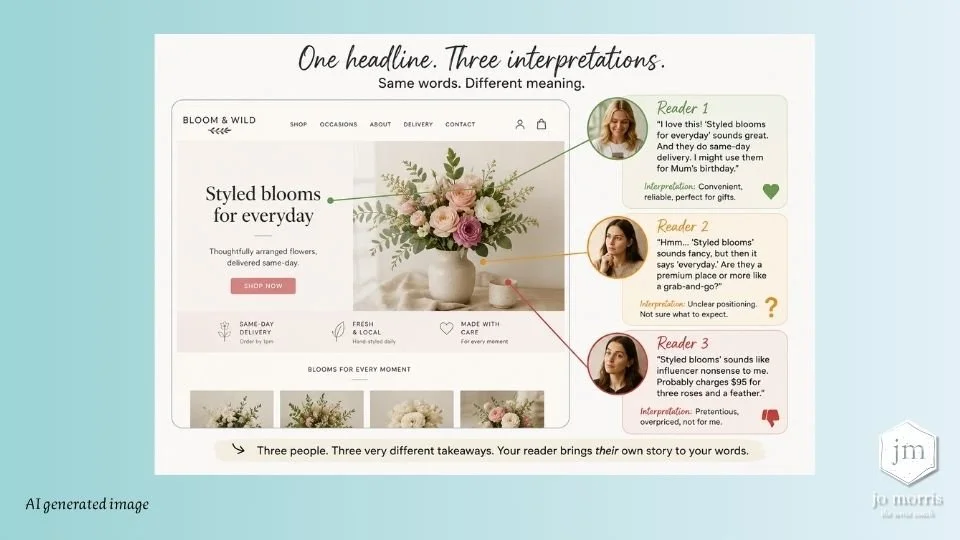
One website. One headline. Three completely different interpretations. This is why testing your writing with real readers is more valuable than trusting your own assumptions.
This doesn’t just happen with websites. You’ve probably misunderstood a text message or email – or been misinterpreted yourself. Reports, proposals, essays, speeches, creative writing: it doesn’t matter what form our communication takes, we’re all convinced people will read our words the way we intended, and surprised when they don’t.
Why are we suprised?
Because we don't read our own words; we read our intention.
We know what we meant. Our brain fills in missing links.
Our reader doesn’t have access to that extra information or context – all they’ve got is what’s in front of them and their own brains.
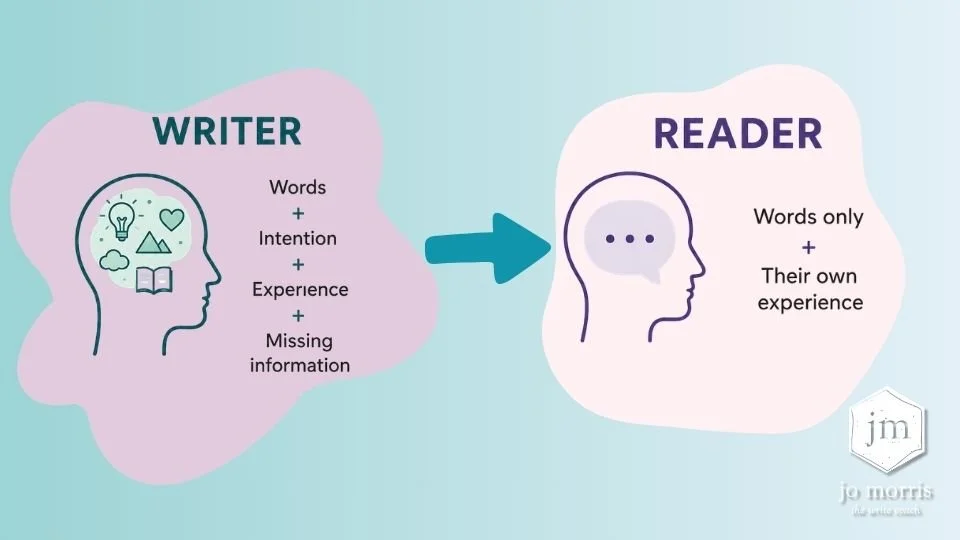
Your reader doesn't know what you meant—they only know what you've written. Every edit should close the gap between your intention and their understanding.
The editing shift
Understanding this is transformative – and practical.
When you edit your work, make this shift:
Instead of asking yourself:
"How can I make this sentence better?"
ask:
"What could someone misunderstand here?"
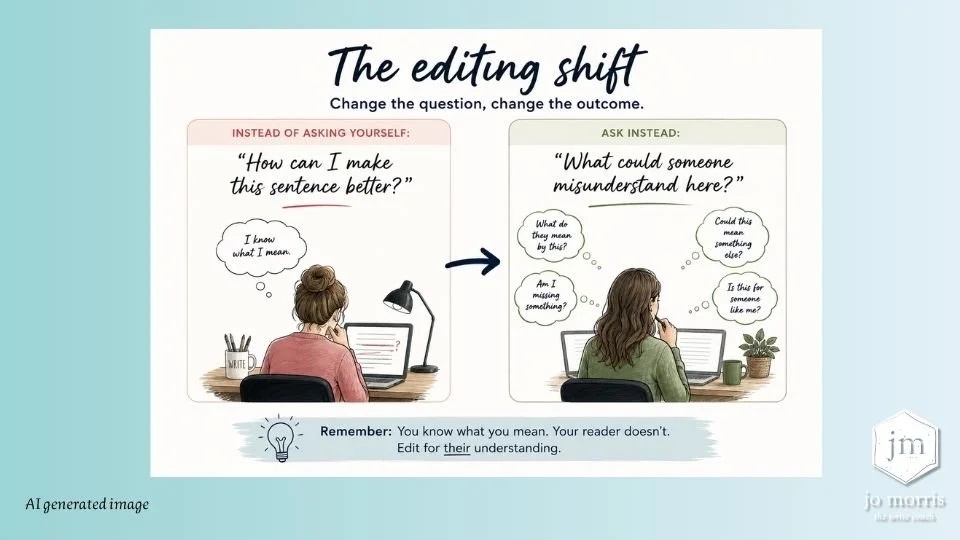
The most powerful editing question isn't "How can I improve this sentence?" It's "What could someone misunderstand here?" That simple shift changes everything.
Media theorists have named how people read the same text in different ways —preferred, negotiated and oppositional—but you don't need to remember the labels. The important lesson is that readers don't simply absorb our words. They interpret them. People don’t just hear (or read) your words – they look for themselves.
They’ll always read your message through their own:
values and beliefs
fears and frustrations
needs and desires.
Editing checklist
That’s all very well, but what steps can you take to minimise the room for misinterpretation?
Try ‘interrogating’ your writing by asking questions like:
· Could someone misunderstand this?
· Am I assuming knowledge they don't have?
· Have I said what I mean—or what I think I mean?
· Is there another interpretation?
· Would someone outside my industry understand this?
· Could this sound arrogant?
· Could this sound vague?
· Could this sound colder than I intended?
This technique is adaptable for every kind of writing.
Practical Tools: How to Audit Your Website for Clarity
Suppose you wanted to apply this editing approach to the Home Page of your website. You might ask:
What message does someone get in 120 seconds?
What would a stranger think this business does?
Do the headings alone tell the story?
Do the words, the visuals and your target market align?
Are there places where you’ve made assumptions? “Of course people understand X…” (They don’t.)
Clear writing isn't writing that's impossible to misunderstand. It's writing that has been tested against real readers instead of trusted to our own assumptions.